
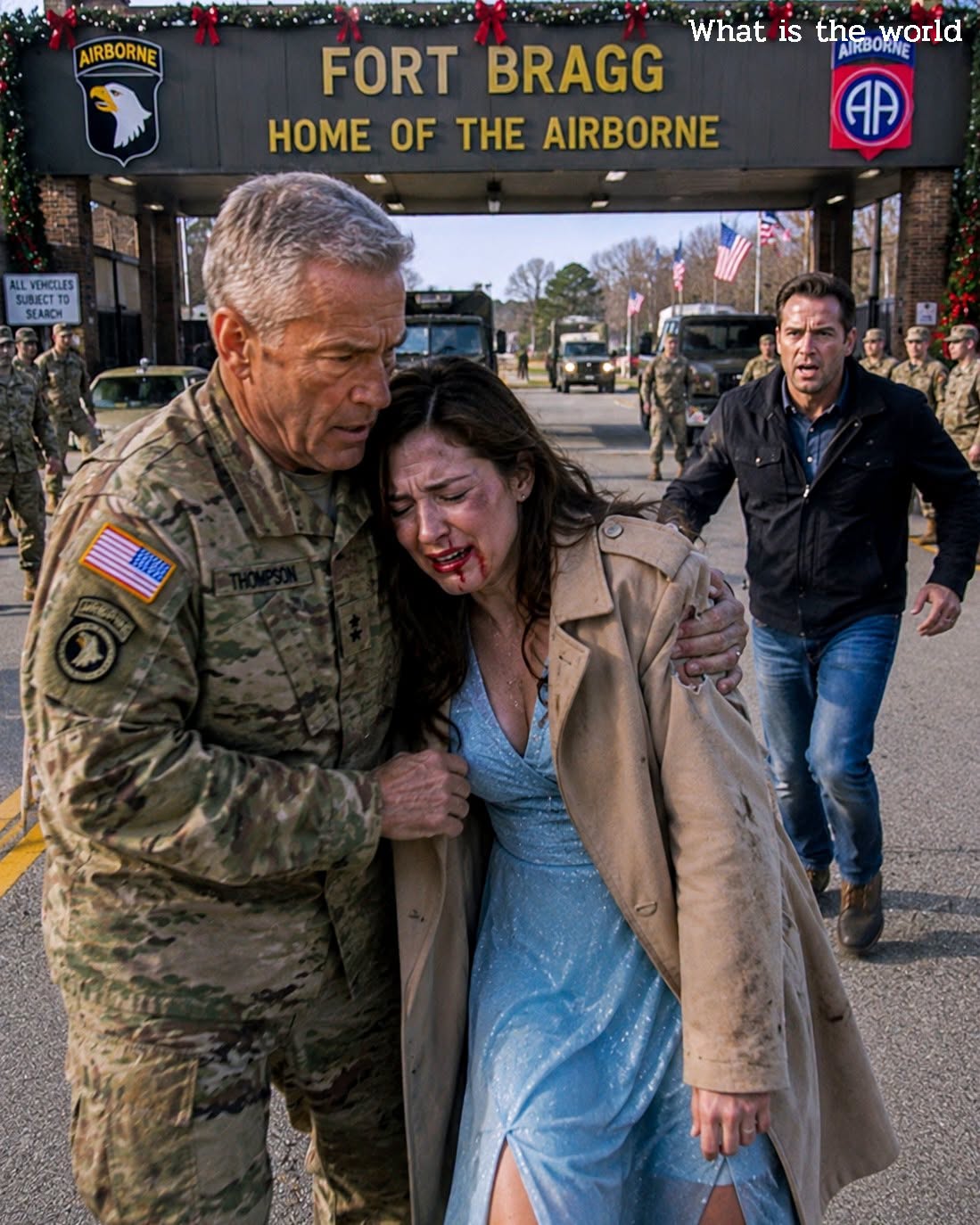
The candidates listened.
“What I need from you is an exercise in open-source analysis. Public records only. Property records, business registrations, court filings, anything legally accessible. You will work through proper channels and document every source.”
One candidate in the first row, Harris, lifted his chin slightly.
“Sir, this is related to your daughter?”
“Yes.”
The honesty seemed to surprise them.
“So treat it as if someone you love is depending on you not to make a careless decision.”
Nobody moved.
“That is the extra credit.”
I collected the pages I had nearly handed out.
“Dismissed.”
They broke formation.
I remained where I was.
For years I had taught men and women to operate under pressure. I had explained that the most dangerous moment was not always the moment when something happened.
Sometimes it came afterward.
When anger offered you ten choices and convinced you there was only one.
My phone rang.
The hospital.
I answered before the second vibration.
“Mr. Mercer?”
“Yes.”
“This is Dr. Patel. Your daughter is awake.”
I was already walking toward my truck.
Claire looked smaller than I remembered.
That was the thought I hated most.
Not weak.
Never weak.
Just smaller beneath the white hospital blanket, as if the room had somehow expanded around her.
A narrow winter light entered through the blinds. There were flowers on the windowsill from nurses on the floor. Someone had left a paper cup of water near the bed with a handwritten note taped to it.
Small sips. You’re doing well.
Claire turned when I entered.
Her face was swollen, and a support bandage curved beneath her chin. The surgeon had explained that the damage would heal, though recovery would require patience.
Patience.
It sounded like a harmless word until you needed months of it.
I pulled a chair beside her bed.
“Hey, kid.”
She tried to smile.
It became something smaller.
“Hey, Dad.”
Her voice was strained, and speaking clearly required effort.
“You don’t have to talk.”
“I know.”
“You’re talking anyway.”
Her eyes softened.
“You always say that.”
“Because you always do it.”
For a moment, we were somewhere else.
She was twelve again, sitting at the kitchen table insisting she could finish a science project with a fever.
She was sixteen, arguing that she was perfectly capable of changing a tire in the rain.
She was twenty-three, calling from her first apartment because a smoke detector would not stop chirping.
Then her eyes moved toward my hands.
“You watched it.”
It wasn’t a question.
I nodded.
Her gaze returned to the window.
“All of it?”
“Yes.”
She closed her eyes.
I wanted to tell her she never needed to be ashamed.
But shame is a strange thing. You cannot order it out of a room.
So instead I said, “I wish I hadn’t needed to.”
She swallowed carefully.
“Who sent it?”
“I don’t know.”
That made her look at me.
“Nathan?”
“I don’t think so.”
“His mother?”
“I doubt it.”
Claire thought for several seconds.
“There were other phones.”
“I noticed.”
Her eyes narrowed with concentration.
“Rebecca had hers out.”
“His cousin?”
She nodded.
“And maybe Daniel.”
“Nathan’s uncle?”
Another nod.
I had memorized those faces during the night.
That frightened me more than I wanted Claire to know.
I leaned forward.
“Claire, the police have the video.”
She stiffened.
I expected fear.
Instead, what crossed her expression was something closer to exhaustion.
“You sent it?”
“Yes.”
“Good.”
One word.
But it changed something inside me.
I had spent the previous night thinking like a father whose daughter had been hurt.
Claire was thinking like someone trying to reclaim her life.
Those were not always the same thing.
“There’s something else,” I said.
She watched me.
“I started looking into the family.”
Her eyebrows rose.
“Legally,” I added quickly.
That almost produced another smile.
“Dad.”
“I know how that sounded.”
“Do you?”
“Probably better than most people.”
She gave a tiny breath of laughter and immediately winced.
I hated that even laughter cost her something.
“I’m sorry.”
“Don’t be. It was worth it.”
We sat quietly.
Then she said, “You need to know why I went there.”
“I thought it was Christmas dinner.”
“It was.”
“But?”
Her fingers tightened slightly around the blanket.
“But Nathan told me his family wanted to fix things.”
“What things?”
She stared at her hands.
“Our marriage.”
I waited.
Claire had always spoken when she was ready. Pushing her had rarely worked when she was five and certainly wasn’t going to work now.
“He said I’d made everyone feel unwelcome,” she continued. “That I was judgmental. That I thought I was better than them.”
“Did you?”
“No.”
She looked at me directly.
“But I stopped agreeing with them.”
There was a difference.
A large one.
“About what?”
“Money, mostly.”
That was not what I expected.
“Nathan started asking me to sign documents in October.”
“What documents?”
“He said they were refinancing papers connected to his parents’ house.”
“And were they?”
“I don’t know.”
“You didn’t sign?”
“No.”
“Why?”
Claire hesitated.
“Because my name was on them.”
I felt the room grow quieter.
“How?”
“They listed me as a guarantor.”
“For his parents?”
“For a company.”
“What company?”
“I never heard the name before.”
She reached toward the bedside drawer.
“My phone?”
I handed it to her.
The screen was cracked at one corner, but it worked.
She scrolled slowly.
“Nathan sent me a PDF.”
She found the message.
I read the company name.
Hearthstone Community Holdings LLC.
“Community holdings?”
“That’s what I said.”
“What did Nathan say?”
“That his uncle was starting a property renovation business.”
“Did you ask your accountant?”
“Yes.”
“Smart.”
“He told me not to sign anything until he reviewed it.”
“And Nathan?”
“He was angry.”
She looked away.
“Not shouting. Just… different.”
Different could mean a thousand things in a marriage.
Silence could become punishment.
A question could become accusation.
A dinner could become an argument without anyone raising their voice.
“What happened after that?” I asked.
“He said I didn’t trust him.”
“Did you?”
Claire did not answer immediately.
Finally she said, “Not anymore.”
The admission seemed to hurt in a way her injuries could not explain.
I reached for her hand.
She let me hold it.
“I kept thinking marriage was supposed to mean giving someone the benefit of the doubt,” she whispered. “So every time something didn’t make sense, I told myself I was being suspicious.”
“That’s not trust.”
“No.”
“What is it?”
She looked at me.
“I don’t know yet.”
Fair answer.
Perhaps better than anything I could have offered.
Detective Elena Ruiz arrived shortly after noon.
She was in her early forties, wearing a dark coat and carrying a notebook that looked as though it had spent years being shoved into crowded bags.
She introduced herself to Claire first.
That told me something.
A lot of people entering the room had addressed me before addressing my daughter.
Doctor.
Administrator.
One young officer.
Ruiz did not.
“This is your statement,” she told Claire. “Your pace. Your words. If you need a break, we stop.”
Claire nodded.
Ruiz glanced at me.
“Would you like your father here?”
Claire looked toward me.
“Yes.”
I stayed.
The interview lasted nearly an hour.
There was nothing theatrical about it.
No dramatic accusations.
No raised voices.
Just details.
Who arrived when.
Who said what.
Which door was locked.
Who had phones.
Who left the room.
Who returned.
I learned things I had not noticed in the video.
Nathan’s younger sister, Emily, had repeatedly asked everyone to calm down.
An aunt named Susan had tried to move closer to Claire but had been told to stay back.
Nathan’s cousin Rebecca had stopped recording halfway through.
And someone—Claire didn’t know who—had unlocked the rear door.
That was how Claire left.
Ruiz circled something in her notebook.
“Did Nathan know you were leaving?”
“I don’t know.”
“Did anyone follow you?”
“No.”
“How did you get to your father’s base?”
“I drove.”
My head snapped toward her.
“You drove?”
Claire gave me a tired look.
“Dad.”
“You were injured.”
“I know.”
“Claire—”
“Victor.”
Detective Ruiz said my name gently.
I stopped.
Claire lowered her eyes.
“I didn’t know where else to go.”
That sentence landed harder than anger.
I had always assumed my daughter knew exactly where she could go.
Home.
To me.
But there was a difference between believing someone would help you and believing you were allowed to ask.
Ruiz closed her notebook.
“That’s enough for today.”
Claire looked relieved.
The detective stood.
“Mr. Mercer, can I speak with you outside?”
We stepped into the corridor.
Ruiz waited until the door shut.
“I know about the records search.”
Of course she did.
I had gone through channels.
“I’m not interfering with your investigation.”
“I didn’t say you were.”
“Not yet.”
That earned a brief smile.
“You’ve had a long career.”
“Long enough.”
“Then you understand why I’m asking you not to turn this into your operation.”
“My daughter is lying in there.”
“I know.”
“You don’t.”
Her expression changed slightly.
Not offended.
Understanding.
“You’re right,” she said. “I don’t know what it feels like to be you.”
That stopped me.
Most people defend themselves.
Ruiz did not.
“But you don’t know what it feels like to be Claire either.”
I looked through the small window in the hospital door.
She was lying back against the pillow.
Ruiz continued.
“She needs control over what happens next. Maybe more than she needs anything else.”
I understood command.
Control.
Authority.
But I had never considered how easily protection could become another form of deciding for someone.
“What do you need from me?” I asked.
“Be her father.”
“That’s it?”
“That’s harder than being an investigator.”
Then she walked away.
At four that afternoon, Harris called.
I had forgotten about the candidates.
“Sir, we found something.”
“What?”
“Can I send it?”
“Yes.”
Three minutes later, my phone contained a folder of public records.
Everything had been collected legally.
Business registrations.
Civil filings.
Property transfers.
Tax liens.
Nothing, by itself, seemed extraordinary.
Until I noticed the same address appearing repeatedly.
1432 Bellweather Road.
It was listed as the principal office of Hearthstone Community Holdings LLC.
I recognized the address.
Nathan’s parents’ home.
The Christmas house.
The second detail was stranger.
Hearthstone had not been created by Nathan’s uncle.
It had existed for seven years.
And Claire’s name appeared in a filing dated fourteen months earlier.
I stared at the screen.
She had been married to Nathan for three years.
According to the filing, Claire Mercer Caldwell had been listed as the company’s financial secretary.
I knew my daughter.
She would remember becoming an officer of a company.
I called Harris.
“Where did this come from?”
“State public business database.”
“You verify it?”
“Twice.”
“Send nothing else to anyone. Keep the source citations.”
“Yes, sir.”
I ended the call.
For a minute, I stood beside the hospital vending machines listening to the mechanical hum.
Then I called Ruiz.
“I found something.”
Claire’s reaction was not what I expected.
She did not look shocked.
She looked confused.
Then frightened by her own confusion.
“I’ve never seen this.”
“You’re sure?”
“Dad.”
“I have to ask.”
“I know.”
She studied the filing.
“That isn’t my signature.”
At the bottom was an electronic authorization.
Her name.
A date.
An email address.
Ruiz leaned closer.
“That email yours?”
Claire nodded slowly.
“Or it was.”
“What does that mean?”
“I stopped using it last year.”
“When?”
She opened her phone calendar.
“February.”
The document had been filed in January.
Ruiz asked, “Who had access to that account?”
“Nobody.”
Then Claire stopped.
Her eyes changed.
“Nathan knew my password.”
“Did he?”
“We used to share passwords for everything.”
Ruiz wrote something down.
“Did he still know it last January?”
“I think so.”
This was the kind of revelation that did not explode.
It settled.
Quietly.
Heavily.
One possibility at a time.
Claire stared at the filing.
“There were other things.”
“What things?” Ruiz asked.
“Mail.”
I sat straighter.
“What mail?”
“Business-looking envelopes. Nathan always said they were his.”
“Were they addressed to you?”
“I don’t know. I didn’t look closely.”
Ruiz spoke carefully.
“Claire, I’m going to ask you something, and I don’t want you to guess. Have you ever noticed accounts, loans, credit cards, tax documents, or financial statements you didn’t recognize?”
Claire’s face went pale beneath the bruising.
“One credit card.”
“When?”
“August.”
“What happened?”
“I saw it on our credit report.”
“How much?”
“Fourteen thousand.”
I fought to keep my expression still.
“What did Nathan say?”
“That it was a bank error.”
“And you believed him?”
“He called the bank while I was there.”
“Did you speak to them?”
“No.”
Claire covered her eyes with one hand.
“I can’t believe I didn’t—”
“Stop.”
The word came out sharper than I intended.
She looked at me.
“You trusted your husband,” I said. “That is not stupidity.”
Ruiz gave me a brief glance.
Claire lowered her hand.
“But I knew things were wrong.”
“Knowing something feels wrong and knowing exactly what it is are different.”
She looked down at the document again.
“I need my laptop.”
“It’s at your house?” Ruiz asked.
“Yes.”
“Then nobody goes there alone.”
Claire looked at me immediately.
I understood the warning.
“I’m not going anywhere.”
“Dad.”
“I’m sitting right here.”
“You’re terrible at sitting.”
“I’m learning.”
That time, the smile reached her eyes.
Only for a moment.
But it was there.
Claire was discharged two days later.
She could have stayed with me on base, but she chose my house outside town.
I had lived there alone since her mother, Helen, died six years earlier.
The house had become too quiet after that.
I kept meaning to change things.
Never did.
Helen’s blue ceramic bowl remained near the entryway.
Her gardening books stayed on the second shelf.
A yellow raincoat still hung in the mudroom, though no one had worn it for years.
When Claire walked inside, she stopped.
“You still have Mom’s coat.”
“Yes.”
“You know you can move things.”
“I know.”
She touched the sleeve.
“But you don’t.”
“No.”
She looked at me.
For once, neither of us pretended the conversation was about a coat.
That evening, my sister Margaret arrived carrying enough food for eight people.
Margaret had always believed casserole was an acceptable response to every human crisis.
“I brought chicken, soup, bread, fruit, yogurt, mashed potatoes, and something called protein pudding.”
Claire raised an eyebrow.
Margaret whispered, “I wouldn’t eat the pudding.”
Claire laughed softly.
Again, the wince.
Again, worth it.
Margaret stayed.
Not because I asked.
Because family sometimes understands when an invitation is unnecessary.
She rearranged the kitchen, complained about my expired spices, and put fresh sheets in the guest room.
At nine, the doorbell rang.
I looked through the window.
Detective Ruiz.
And beside her stood a woman I recognized from the video.
Nathan’s younger sister.
Emily.
I opened the door halfway.
Emily looked exhausted.
Twenty-six, maybe twenty-seven.
She held a canvas bag against her chest.
“I need to speak to Claire.”
“No.”
Behind me, Claire said, “Dad.”
I closed my eyes.
Of course.
I stepped aside.
Emily entered slowly.
Margaret came from the kitchen and immediately understood enough to disappear without being asked.
Claire sat in an armchair near the fireplace.
Emily remained standing.
“I’m sorry.”
Claire’s expression tightened.
Emily shook her head.
“I know that isn’t enough. I’m not asking you to forgive me.”
“What do you want?”
“I brought something.”
She placed the canvas bag on the coffee table.
Inside were envelopes.
Dozens of them.
Some unopened.
Some torn.
Some addressed to Claire.
Claire stared.
“Where did you get those?”
“My mother’s office.”
The room changed.
Ruiz remained near the doorway.
“Why were they there?” Claire asked.
Emily swallowed.
“I don’t know everything.”
“Then tell me what you know.”
Emily sat only after Claire gestured toward the sofa.
“Our family has money problems.”
Claire gave a short, humorless breath.
“I guessed.”
“No. Not regular money problems.”
Emily looked at me, then back at Claire.
“My dad’s business almost failed four years ago. Uncle Daniel started moving debts between companies.”
“Hearthstone,” I said.
Emily nodded.
“There are others.”
“How many?”
“At least five.”
Claire’s fingers tightened.
“And my name?”
Emily looked ashamed.
“I heard them talk about it.”
“When?”
“Last year.”
“What did they say?”
“That Nathan had solved a problem.”
Claire became very still.
Emily’s voice dropped.
“I thought you knew.”
“You thought I agreed to this?”
“I didn’t know what you agreed to.”
“But you knew my name was being used.”
Emily blinked rapidly.
“Yes.”
Silence.
That single admission seemed more painful to Claire than anything Emily could have said.
They had been friends once.
Before Nathan, even.
Claire had met Nathan through Emily.
I remembered birthdays.
Brunches.
Two young women laughing in my kitchen while Helen complained they were stealing all the strawberries before dessert.
Claire looked toward the fire.
“You introduced us.”
“I know.”
“Did you know then?”
“No.”
“About any of this?”
“No.”
“Why should I believe you?”
Emily had no answer.
That was probably the most honest answer she could give.
After a while, she pushed the bag forward.
“I found these yesterday. Mom told everyone not to go into the office. So I did.”
Despite everything, Claire almost smiled.
“That sounds like you.”
“Apparently I only become brave when it’s terribly late.”
Claire’s expression softened, but only slightly.
“Why did you come here?”
“Because I saw what happened on Christmas.”
Her voice trembled.
“And I realized silence doesn’t stay neutral just because you call it silence.”
Ruiz glanced at her.
“Emily, are you willing to give a formal statement?”
“Yes.”
“You understand it may affect members of your family?”
“Yes.”
“Including Nathan?”
Emily looked at Claire.
“Yes.”
Claire did not thank her.
She should not have had to.
But when Emily stood to leave, Claire said, “I hope you tell the truth because it’s the truth.”
Emily paused.
“Not because of me.”
“I understand.”
“I hope you do.”
We opened none of the envelopes ourselves.
Ruiz took photographs, cataloged them, and arranged for the relevant documents to be reviewed properly.
But one envelope was already open.
It contained a letter from a regional bank.
The first paragraph mentioned an overdue commercial loan.
The second mentioned Claire as a guarantor.
The balance was $486,000.
Claire read the number twice.
Then handed the letter to me.
Nearly half a million dollars.
In her name.
“This can’t be real.”
Ruiz said, “The letter may be real. That doesn’t mean the obligation is legally yours.”
Claire stared at the Christmas tree I had not bothered taking down.
Helen had bought most of the ornaments.
A wooden soldier.
A glass snowflake.
A tiny silver house Claire made in third grade.
“I thought Christmas dinner was about our marriage,” Claire said.
Emily had already left.
Ruiz remained silent.
I understood before Claire said it.
“They wanted me to sign something.”
Ruiz looked at her.
“What makes you think that?”
“Nathan kept saying we needed to settle everything before New Year’s.”
“What everything?”
“He wouldn’t tell me.”
Claire closed her eyes, rebuilding the evening.
“When I arrived, there was a folder on the dining table.”
I remembered it from the video.
Brown leather.
I had assumed it held holiday papers or photographs.
Claire continued.
“His mother moved it before everyone came into the room.”
Ruiz took out her notebook.
“What color?”
“Dark brown.”
“Did you see any documents?”
“One page.”
“What did it say?”
“I don’t remember.”
“Anything.”
Claire concentrated.
“There was a blue logo.”
“Bank?”
“Maybe.”
“What else?”
“A number.”
“What number?”
She shook her head.
“I don’t know.”
I watched her struggle.
“Don’t force it.”
She looked at me.
Then suddenly her expression changed.
“March thirty-first.”
Ruiz stopped writing.
“What?”
“The page said March 31.”
“Of what year?”
“I couldn’t see.”
Ruiz made a note.
Claire continued staring into space.
“And there was a name.”
“What name?”
“I only saw it for a second.”
“Take your time.”
Claire whispered it.
“Mercer.”
My surname.
Her maiden name.
My name.
I felt something cold move through me.
“Claire Mercer?” Ruiz asked.
“No.”
Claire slowly looked at me.
“No.”
Her face had gone pale.
“It wasn’t Claire.”
Ruiz leaned forward.
“What did it say?”
Claire’s eyes remained on mine.
“Victor Mercer.”
Nobody spoke.
I took the letter from the coffee table and set it down carefully.
“What exactly did you see?”
“My name was on one line.”
She pointed toward an imaginary page.
“And yours was underneath.”
“As what?”
“I don’t know.”
Ruiz asked, “Would there be a reason Nathan’s family believed Mr. Mercer had financial assets connected to you?”
Claire looked confused.
Then I remembered.
Helen.
When my wife died, most of her estate went into a family trust.
Not enormous wealth.
But substantial.
The trust was meant for Claire eventually, with me serving as trustee until certain conditions were met.
Nathan knew about it.
At least partly.
Claire had told him.
“Dad?”
I stood.
“Where are the trust documents?”
“In my study.”
“Who knows the details?”
“My attorney. Margaret. You.”
“And Nathan.”
“No.”
Claire looked uncomfortable.
“I told him some things.”
“How much?”
“That Mom left money in trust.”
“How much?”
“I never told him the amount.”
“Did you tell him who controlled it?”
She hesitated.
“I might have said you did.”
Ruiz asked, “Could someone have borrowed against the trust?”
“No.”
“Could Claire?”
“Not without conditions.”
“What conditions?”
I looked at my daughter.
“At thirty-five, she gains independent control over part of it.”
Claire was thirty-four.
Her thirty-fifth birthday was March 31.
The same date on the document.
No one in the room moved.
The mystery that had seemed to concern a failing family company suddenly had a new shape.
Not certainty.
Not proof.
But shape.
Claire whispered, “They were waiting for my birthday.”
Ruiz held up one hand.
“We don’t know that.”
“But March thirty-first—”
“Is significant. Yes. But we follow evidence, not conclusions.”
She was right.
Again.
Claire leaned back.
For the first time since Christmas, I did not see only exhaustion in her.
I saw anger.
Not wild anger.
Clear anger.
The kind that creates boundaries.
“What happens now?”
Ruiz answered.
“You recover. We investigate.”
“And Nathan?”
“That depends on evidence, prosecutors, and the court.”
Claire nodded.
Then she looked at me.
“And you?”
“What about me?”
“What are you going to do?”
Two days earlier, I could have answered without thinking.
Now I understood the question beneath the question.
Are you going to make this worse?
Are you going to disappear into anger?
Are you going to turn my life into your mission?
I sat beside her.
“I’m going to make dinner.”
Claire blinked.
“What?”
“Your aunt left instructions.”
Ruiz smiled.
Claire stared at me as though I had lost my mind.
“That’s your plan?”
“For tonight.”
“And tomorrow?”
“I’m taking you to your appointment.”
“And after that?”
“Whatever you ask me to do.”
Her eyes filled.
I pretended not to notice.
She pretended the same.
Family sometimes gives dignity by looking away at exactly the right moment.
That night, after Claire went upstairs, I sat alone in my study.
Helen’s photograph stood beside the lamp.
She was laughing in it.
She had always laughed with her whole face.
“I almost made a terrible decision,” I told the photograph.
No answer.
Helen had been good at letting silence do work.
“I thought protecting her meant taking control.”
The house creaked.
Outside, snow had begun falling.
“I suppose you would have told me that was very Victor of me.”
I could almost hear her.
Extremely Victor.
I smiled despite myself.
Then I noticed something on my desk.
An envelope.
Old.
Cream-colored.
My name written across the front.
Victor — private.
I knew the handwriting immediately.
Helen’s.
For six years, I had believed I had opened every letter she left behind.
This one had been tucked inside a legal folder containing copies of the trust documents.
I opened it.
The letter was dated three months before she died.
Victor,
If you are reading this, then I have either become unusually organized or you have finally cleaned the study. I suspect the first.
There is something about Claire’s trust I never told her, because I wanted her to inherit choices rather than expectations.
I stopped.
Continued.
My parents’ old property on Bellweather Road was never sold entirely. I retained a minority interest through a family holding arrangement after the land was subdivided years ago. The interest is small, but complicated. I have asked Thomas to resolve it before Claire receives full control of the trust.
Bellweather.
I read the paragraph again.
1432 Bellweather Road was Nathan’s parents’ address.
I kept reading.
If the interest cannot be resolved, there may someday be people who discover Claire has a legal connection to that property without her knowing it. Do not let anyone rush her into signing anything. She must understand what she owns before deciding what she owes.
My pulse slowed instead of quickening.
This was not a coincidence I could explain away.
I reached for my phone.
Then stopped.
At the bottom of the letter Helen had added one final line.
One sentence.
The handwriting was shakier.
And Victor—if the Caldwell name ever appears anywhere in the Bellweather records, call Thomas immediately. There is history there I never found the courage to explain.
I stared at the sentence.
Caldwell.
Nathan’s surname.
I picked up my phone and called the number I had not dialed in years.
Thomas Avery had been Helen’s attorney for almost two decades.
He answered on the fifth ring.
“Victor?”
“Yes.”
“It’s nearly midnight.”
“I found Helen’s letter.”
Nothing.
Not even breathing.
Then Thomas said quietly, “Which letter?”
“The Bellweather letter.”
Another silence.
Longer this time.
When he finally spoke, his voice had changed.
“Victor, where is Claire?”
“Upstairs.”
“Is she safe?”
“Yes.”
“Good.”
I stood.
“What did Helen know about the Caldwells?”
Thomas exhaled.
“I was hoping you would never have to ask me that.”
“Thomas.”
“There is something Claire should hear from me, not over the phone.”
“What?”
“Helen didn’t create the trust only to provide for Claire.”
My hand tightened around the phone.
“Then why?”
“To protect something.”
“What?”
Thomas paused.
“Ownership.”
“Of Bellweather?”
“Not exactly.”
I looked at Helen’s letter again.
“What aren’t you telling me?”
Thomas answered with a question.
“Do you remember why Helen stopped speaking to her older sister?”
I frowned.
Helen’s sister, Caroline, had disappeared from our family life long before Claire was born.
“Helen said they disagreed about an inheritance.”
“That was true.”
“What does that have to do with Nathan?”
Everything became silent.
Even the old house seemed to listen.
Thomas finally said, “Victor, Nathan Caldwell’s mother is not connected to Helen by business.”
My eyes moved toward the ceiling, toward the room where my daughter slept.
Thomas continued.
“She is connected to her by family.”
And suddenly the seventeen names on my list did not look like seventeen strangers anymore.
They looked like pieces of a history Claire had never been told.
A history Helen had tried to protect her from.
And somewhere inside that history was the answer to why Nathan’s family had been so desperate for Claire to sign a document before March thirty-first.
-END OF PART 2 –PRESS NEX PART IN BOTTOM OF PAGE TO READ NEXT PART
Thomas Avery arrived the following morning at nine.
He brought no dramatic briefcase filled with secrets.
No mysterious box.
Just an old leather folder, a thermos of coffee, and the tired expression of a man who had carried someone else’s promise for too many years.
Claire joined us in the dining room.
Margaret was there too.
My sister had arrived at seven, announced that nobody should receive complicated family revelations without breakfast, and made oatmeal soft enough for Claire to eat comfortably.
Thomas took the chair opposite us.
For a moment, he simply looked at Claire.
“You resemble your mother more every year.”
Claire gave him a guarded smile.
“People keep telling me that.”
“She would have been proud of you.”
Claire’s smile disappeared.
“Please don’t start there.”
Thomas nodded.
“Fair.”
She folded her hands on the table.
“Start with Bellweather.”
So he did.
Before Bellweather Road became a suburban street lined with large houses and trimmed hedges, it had been part of eighty acres owned by Claire’s maternal grandparents.
The land had been divided decades earlier.
Some parcels were sold.
Others were placed into partnerships.
Helen inherited a minority interest.
So did her older sister Caroline.
“What happened to Caroline?” Claire asked.
Thomas looked toward me.
I shook my head.
This was his story to tell.
“Caroline married a man named Richard Caldwell.”
Claire stared.
“Nathan’s grandfather?”
“Yes.”
The answer was so simple that for a moment it seemed impossible.
Margaret whispered, “Helen never told us.”
“She rarely spoke about Caroline after the lawsuit.”
“What lawsuit?”
Thomas opened the leather folder.
“Your grandparents’ estate.”
The disagreement had lasted almost three years.
Not because anyone had been enormously wealthy.
Because the estate contained property whose future value nobody could predict.
Caroline believed Helen had received more than her fair share.
Helen believed Caroline’s husband was pressuring her to consolidate the property under his control.
Eventually, they settled.
At least on paper.
“They stopped speaking?” Claire asked.
“For many years.”
“Completely?”
“Almost.”
“What does almost mean?”
Thomas hesitated.
“Helen contacted Caroline once.”
“When?”
“The year before you married Nathan.”
Nobody moved.
Claire blinked.
“My mother knew who Nathan was?”
“No.”
Thomas leaned forward.
“She knew his surname.”
“That isn’t the same thing.”
“No.”
“Did she investigate him?”
“Not formally.”
I felt an old ache beginning beneath my ribs.
Helen had been dying during part of Claire’s early relationship with Nathan.
She had met him only twice.
I remembered her studying him over dinner.
I had assumed she was simply being a mother.
Now every memory seemed capable of carrying a second meaning.
“Why didn’t she tell me?” Claire asked.
Thomas’s expression softened.
“Because she wasn’t certain the families were connected. Caldwell is not an unusual surname. And by the time I confirmed Richard Caldwell was Nathan’s grandfather, Helen was very ill.”
Claire looked at me.
“Did Dad know?”
“No.”
She returned her gaze to Thomas.
“So Mom knew I might be marrying into Aunt Caroline’s family?”
“Yes.”
“And said nothing?”
Thomas took his time answering.
“She was trying to decide whether telling you would protect you or burden you.”
Claire pushed back slightly.
“She made the decision for me.”
“Yes.”
There was no defense in Thomas’s voice.
That mattered.
Sometimes love makes mistakes while believing it is preventing them.
Claire looked toward the window.
Snow covered the backyard.
“My entire marriage, Nathan was related to me?”
“Distantly by marriage, not by blood,” Thomas clarified. “There’s no biological relationship between you.”
Claire nodded.
“Still strange.”
“Very.”
I asked, “What did Helen mean when she said the trust protected ownership?”
Thomas opened the folder.
“Helen’s settlement included a clause regarding the remaining Bellweather interest.”
He placed a document on the table.
The paper was nearly twenty years old.
“The clause gave Helen what attorneys call a right of reversion under certain conditions.”
“In English,” Margaret said.
Thomas almost smiled.
“If the company controlling one of the Bellweather parcels failed to meet specific financial obligations, part of its ownership interest could revert to Helen or her heirs.”
Claire slowly understood.
“Hearthstone.”
“Yes.”
“Owns the parcel?”
“Controls it through two other entities.”
“And they’re failing financially.”
“That appears possible.”
I leaned forward.
“If the company defaults, Claire gains something?”
“Potentially.”
“How much?”
“We don’t know until the records are fully reviewed.”
Claire frowned.
“Then why would Nathan’s family want me to guarantee their debt?”
Thomas looked at her.
“Because if you became personally responsible for certain obligations, the legal picture could become far more complicated.”
“Could they take my trust?”
“Not automatically.”
“Could they try?”
“Yes.”
That single word explained more than a long speech could have.
Claire sat quietly.
Then she asked the question none of us expected.
“Did Nathan marry me because of this?”
Thomas did not answer.
Neither did I.
Because we did not know.
And not knowing was worse than almost any conclusion.
For the next week, our lives became ordinary in small, deliberate ways.
Claire attended medical appointments.
Margaret brought groceries.
I learned how to make soup that did not taste like military field rations.
Detective Ruiz called when there were updates and did not call when there were not.
The legal process moved slowly.
That surprised Claire.
Perhaps all of us.
We were accustomed to stories where evidence produces immediate answers.
Real life contained waiting.
Forms.
Appointments.
Conflicting accounts.
Phone calls not returned until Tuesday.
Documents requested from offices closed for the holiday.
Claire began sleeping better.
Then worse.
Then better again.
Healing refused to travel in a straight line.
One afternoon, I found her at the dining table surrounded by notebooks.
“What’s this?”
“My marriage.”
I looked at the pages.
Dates.
Bank statements.
Vacations.
Birthdays.
Comments Nathan had made.
“Sheesh.”
“I’m making a timeline.”
“For Ruiz?”
“For me.”
I sat across from her.
“Does it help?”
“Sometimes.”
“And the other times?”
“It makes me feel ridiculous.”
“Why?”
“Because I can see things now.”
“That doesn’t mean you could see them then.”
“I should have.”
I shook my head.
“Your mother once drove three hours in the wrong direction because she refused to admit she’d missed an exit.”
Claire looked up.
“What does that have to do with anything?”
“I’m not sure.”
She stared at me.
“I’m trying to be supportive.”
“You’re terrible at it.”
“I’m improving.”
Her mouth curved.
Then she looked back at the notebook.
“Dad?”
“Yes?”
“Were you happy with Mom?”
The question surprised me.
“Yes.”
“Always?”
“No.”
She looked up again.
I continued.
“We loved each other. That isn’t the same as always being happy.”
“Did you trust her?”
“Yes.”
“Always?”
I thought about Helen’s letter.
About Bellweather.
About the secret she had kept.
“No.”
Claire absorbed that.
“Did that ruin everything?”
“No.”
“Why not?”
“Because trust isn’t never being disappointed.”
I stopped.
The answer came slowly.
“It’s what happens after the disappointment becomes known.”
Claire looked down.
“What if what happens afterward is that everything ends?”
“Then maybe ending is the honest part.”
She was silent.
I had spent years believing resilience meant enduring.
Claire was teaching me another definition.
Sometimes resilience meant refusing to carry something any farther.
Nathan called eleven days after Christmas.
Not me.
Claire.
She stared at the screen until it stopped.
Then he called again.
Again.
On the fourth call, she switched the phone off.
“Do you want me to block him?”
The old Victor would have taken the phone.
Handled it.
Solved it.
The new version was still under construction.
Claire shook her head.
“No.”
“Okay.”
“I want to know if he leaves a message.”
A voicemail appeared five minutes later.
Claire did not play it immediately.
She waited until Ruiz arrived the following morning.
Then the three of us listened.
Nathan’s voice sounded exhausted.
“Claire, I know you probably don’t want to hear from me. I’m not asking you to come back. I just need you to know there are things about my family I didn’t understand. Please don’t sign anything anyone sends you. Please talk to Emily. And… I’m sorry. I know that isn’t enough. I know.”
The recording ended.
Claire stared at the phone.
I felt anger rise.
Not because he threatened her.
Because he sounded human.
That made everything harder.
People want villains to sound like villains.
Real life rarely provides that convenience.
Ruiz asked, “Do you want to respond?”
“No.”
“Then don’t.”
“Can you talk to him?”
“We already have.”
Claire looked up.
“When?”
“Yesterday.”
“And?”
“I can’t give you every detail.”
“Why not?”
“Because it’s an active investigation.”
Claire closed her eyes.
“I hate that phrase.”
Ruiz smiled slightly.
“Most people do.”
“Did he say why he wanted me at Christmas dinner?”
Ruiz hesitated.
“Yes.”
My chair felt suddenly too small.
Claire opened her eyes.
“Why?”
“He says his father told him the family needed your signature to restructure debt.”
“He knew?”
“He knew about the debt.”
“And my name being used before?”
Ruiz watched her carefully.
“He says he discovered that recently.”
“Do you believe him?”
“That isn’t my job.”
“It feels like somebody’s job.”
“My job is to compare what he says with evidence.”
Claire nodded.
“And the video?”
Ruiz’s expression hardened slightly.
“He is accountable for his own actions and choices that evening. Whatever he says about the financial matters does not erase that.”
Claire looked relieved by the clarity.
Then Ruiz added, “But there’s something you should know.”
She opened a folder.
“The video you received did not come from Nathan.”
“I knew it.”
“It came from Rebecca Caldwell.”
Nathan’s cousin.
The woman who had stopped filming midway through.
“Why?”
“She says she sent it because she was afraid the family would later deny what happened.”
Claire looked down.
“Did she participate?”
“She was present. She has given a statement about what she did and what she witnessed.”
“Why didn’t she help me?”
Ruiz did not invent an answer.
“She says she froze.”
Claire looked toward the window.
“I keep discovering everyone had reasons.”
Ruiz nodded.
“Reasons aren’t the same as excuses.”
That distinction stayed with all of us.
Two days later, Emily returned.
This time Claire invited her.
They sat together in the sunroom while Margaret and I remained in the kitchen.
I could hear their voices but not every word.
Once, Claire laughed.
That surprised me.
Later Emily cried.
Claire did not immediately comfort her.
That surprised me too.
After nearly an hour, Emily left.
Claire remained in the sunroom.
I brought her tea.
“Want company?”
“Yes.”
I sat.
“She knew more than she told us the first time.”
I waited.
“She knew their grandfather had fought with Mom’s family.”
“What else?”
“Nathan found some old papers after his grandfather died.”
“When?”
“Two years ago.”
My stomach tightened.
“What papers?”
“Letters between Aunt Caroline and Mom.”
“And Emily saw them?”
“A few.”
Claire picked up her tea but did not drink.
“Dad, Mom tried to reconcile with Caroline.”
I thought of Helen’s last years.
Illness had reduced her world.
But apparently not her hope.
“What happened?”
“Caroline wrote back.”
“What did she say?”
“She wanted to see Mom.”
“Did they?”
“No.”
“Why?”
“Caroline died before they could.”
I had not known.
Claire stared at the garden.
“Nathan’s family kept the letters.”
“Why?”
“Emily says her father believed they proved the Bellweather rights should belong to the Caldwells.”
“Did they?”
“No.”
“How do you know?”
“Because Mom wrote the opposite.”
Claire handed me a photocopy Emily had brought.
It was Helen’s handwriting.
Caroline,
I don’t care who owns Bellweather anymore. I care that our children never inherit the argument we did.
If there is a fair way to untangle the property, we should find it. Neither family needs another generation measuring love in acres and signatures.
I read it twice.
That was Helen.
Practical.
Tender.
Occasionally infuriating.
Always believing people could choose differently.
Claire said, “They inherited the argument anyway.”
“Seems so.”
“But I don’t have to.”
I looked at her.
That was the first time she sounded not merely hurt or angry.
She sounded decided.
“What are you thinking?”
“I want to sell whatever interest I have.”
“To them?”
“No.”
“Then to whom?”
“I don’t know yet.”
She looked through the glass doors toward the snow.
“But I don’t want Bellweather.”
“If it’s worth significant money—”
“I know.”
“Then don’t decide quickly.”
She smiled faintly.
“There’s the father I recognize.”
“I’m serious.”
“So am I.”
She placed the letter on the table.
“Mom said nobody needs another generation measuring love in acres and signatures.”
“That doesn’t mean you should give away something valuable.”
“No. But maybe value isn’t the same as keeping it.”
I had no answer.
Perhaps she did not need one.
The financial investigation took another month.
By February, the shape of the story was clearer.
Hearthstone and several related companies had accumulated large debts.
Some documents bearing Claire’s name appeared legitimate.
Others did not.
The disputed signatures were being reviewed.
The credit card was confirmed to have been opened without Claire personally completing the application.
Nathan admitted he had known about some of his family’s efforts to use Claire’s financial standing but denied knowing the full extent.
What he knew, when he knew it, and what legal responsibility followed would be determined elsewhere.
Claire stopped asking me to predict the outcome.
I stopped pretending I could.
Her physical recovery progressed steadily.
One cold morning in late February, I drove her to an appointment.
On the way home, she said, “I want to go back to my house.”
My hands tightened slightly on the wheel.
“Today?”
“This weekend.”
“Are you sure?”
“Yes.”
“You can stay with me as long as you want.”
“I know.”
“Your room—”
“Dad.”
I stopped.
She smiled.
“I need to see it.”
I knew what she meant.
Not retrieve things.
Not inspect damage.
See whether it still felt like hers.
So on Saturday, we went.
Ruiz had confirmed there was no issue with Claire entering.
Margaret came.
Emily offered, but Claire declined.
“This is family,” she said.
Margaret raised an eyebrow.
“Emily isn’t?”
Claire thought about it.
“Maybe someday.”
The house looked ordinary.
That offended me somehow.
Same porch.
Same small wreath Claire had hung in December.
Same blue planter.
How could a place remain physically unchanged after the meaning of everything inside it had shifted?
Claire unlocked the door.
We entered.
She stood in the hallway for a long time.
“You okay?”
“No.”
I waited.
Then she said, “But I still want to be here.”
We spent the afternoon packing Nathan’s belongings according to arrangements made through attorneys.
No drama.
No destruction.
No symbolic bonfire.
Sweaters went into boxes.
Books.
Shoes.
A coffee grinder.
Photographs.
Claire paused at their wedding album.
She opened it.
Turned three pages.
Closed it.
“Keep or box?” Margaret asked gently.
Claire stared at the cover.
“Mine.”
She placed it aside.
I almost asked why.
Then understood.
Ending a marriage did not require pretending it had never existed.
Some memories were still hers even if the future was not.
In the office upstairs, Claire found the folder.
Dark brown leather.
The one from Christmas Eve.
Nathan had apparently brought it home before Christmas and returned it afterward.
Inside were copies of documents.
Nothing signed.
The blue logo belonged to the same regional bank.
March 31 appeared several times.
And my name appeared beneath Claire’s.
Victor Mercer — Trustee acknowledgment required.
I read it carefully.
“They needed both of us.”
Claire nodded.
“So even if I had signed—”
“I wouldn’t have.”
“I know.”
She looked at me.
“Did they?”
“No.”
“Did they know that?”
“Probably not.”
Claire almost laughed.
“All this because they thought you would sign something because I asked.”
“They underestimated how annoying I am about paperwork.”
“That may have saved us.”
“At last, a practical use for my personality.”
Margaret, standing in the doorway, said, “I’ve been waiting sixty-three years.”
Claire laughed.
A real laugh.
No wince this time.
All three of us noticed.
Nobody commented.
In early March, Claire received a letter.
Not from Nathan.
From his mother.
She almost threw it away.
Instead, she gave it to Ruiz, who reviewed it before returning it.
“It doesn’t contain anything legally concerning,” Ruiz said.
“Meaning?”
“You can read it if you want. Or not.”
Claire waited three days.
Then read it.
Afterward, she handed it to me.
I did not open it.
“What does she say?”
“She says she’s sorry.”
I remained silent.
“She says she spent years believing protecting the family meant keeping every problem inside the family.”
“That sounds convenient.”
“Yes.”
Claire looked at the envelope.
“But it also sounds true.”
“Those things can coexist.”
“I know.”
She looked at me.
“Do you think forgiveness means believing somebody has changed?”
“No.”
“What does it mean?”
“I’m still working on trust.”
She smiled.
“Helpful.”
“I can invent something.”
“Please don’t.”
We sat together.
Then she said, “I think forgiveness might just mean I don’t want to organize my life around being angry at them.”
I thought about the list.
Seventeen names.
Seventeen addresses.
How close I had come to organizing myself around exactly that.
“That sounds reasonable.”
“I’m not ready.”
“You don’t need to be.”
“I might never speak to most of them again.”
“That’s your choice.”
“I might forgive some of them and still never see them.”
“Also your choice.”
She folded the letter.
“Mom should have told me.”
“Yes.”
“She was trying to protect me.”
“Yes.”
“She was still wrong.”
“Yes.”
Claire smiled.
“You’re getting better at this.”
“At what?”
“Not arguing me out of my feelings.”
I considered that.
“Your mother would be furious you discovered I can learn.”
“She always said there was hope.”
March thirty-first arrived with rain.
Claire’s thirty-fifth birthday.
For months, the date had carried the weight of contracts, ownership rights, and secrets.
Claire decided it would be a birthday instead.
Margaret hosted dinner.
Emily came.
So did several of Claire’s friends.
Detective Ruiz stopped by briefly with a card and refused cake until Margaret told her refusal was not an available option.
There were no speeches.
Claire had requested that.
There were flowers.
Music.
Too much food.
At eight, Thomas Avery arrived carrying a final set of documents.
Claire groaned.
“I said no paperwork at my birthday.”
“This is good paperwork.”
“No such thing.”
“You’re becoming more like your father.”
“That’s offensive.”
I was standing three feet away.
“Thank you.”
Thomas laughed.
Then he explained.
A settlement had been reached regarding the Bellweather property dispute independent of the criminal investigation.
The company controlling the parcel would sell it.
Valid creditors would be paid.
Claire’s inherited interest would be recognized.
No guarantee from Claire’s trust.
No trustee signature from me.
No transfer of the trust assets.
“What happens to the house?” Claire asked.
“Nathan’s parents’ house is on a separately titled residential parcel. It isn’t part of this settlement.”
Claire visibly relaxed.
That surprised me.
“You’re glad?”
“Yes.”
“After everything?”
She looked at me.
“I don’t want anybody homeless.”
Simple.
No grand declaration.
No moral triumph.
Just Claire.
Thomas continued.
“Your share will be larger than Helen expected.”
“How much?”
He told her.
Margaret nearly dropped a serving spoon.
Claire stared.
“That’s ridiculous.”
“It’s property appreciation over several decades.”
“What am I supposed to do with that?”
“Whatever you choose.”
Claire looked toward Helen’s old photograph on Margaret’s mantel.
Then she smiled slowly.
“I know what I want to do with some of it.”
Six months later, the former Bellweather dispute had become something none of us predicted.
Claire used part of her proceeds to establish a small grant program through a local community foundation.
Not a charity bearing her name.
Not a monument to what happened.
A practical fund helping people obtain independent financial counseling when separating households, rebuilding credit, or untangling shared obligations.
When she explained the idea to me, she said, “I kept thinking about that credit card.”
“The fourteen thousand?”
“Yes.”
“I wish I’d known who to ask without feeling embarrassed.”
“You had me.”
She smiled.
“Dad, you once spent forty-five minutes explaining compound interest when I asked whether I should buy a used Honda.”
“It was relevant.”
“It was a hostage situation.”
“I was thorough.”
She laughed.
The sound no longer hurt.
That alone felt miraculous.
She went back to work.
She sold the house eventually.
Not because she was afraid of it.
Because she wanted somewhere with bigger windows and less history.
She bought a small place near a park.
Margaret helped decorate.
I was assigned shelf installation and forbidden from giving design opinions.
Emily remained in Claire’s life, cautiously.
Their friendship was not restored overnight.
Some weeks they talked twice.
Sometimes a month passed.
Trust returned in teaspoons.
Perhaps that was the only reliable way.
As for Nathan, Claire filed for divorce.
He accepted it.
There were legal consequences arising from what happened Christmas Eve and separate proceedings connected to the financial records. Claire participated when required and otherwise stopped making those processes the center of her days.
Once, nearly a year later, she received a letter from him.
She read it.
Then placed it in a drawer.
“You keeping it?” I asked.
“Yes.”
“Why?”
“Because throwing it away would be a decision too.”
I nodded.
She had become better than I was at allowing things to exist without immediately acting on them.
“Do you forgive him?”
She thought.
“I don’t know.”
Then she looked at me.
“And I finally understand that I don’t have to know today.”
The following Christmas, Claire came to my house before sunrise.
She had a key.
She still rang the bell.
I opened the door wearing pajama pants and one sock.
She held two coffees.
“You look very elite,” she said.
“I’m retired before seven.”
“You’re not retired.”
“Spiritually.”
She walked inside.
The house smelled like pine and cinnamon.
Helen’s raincoat still hung in the mudroom.
But now there were new things too.
Claire’s scarf.
Margaret’s ridiculous holiday apron.
A photograph of the three of us from Claire’s birthday.
Another photograph from the opening of the community grant program.
Life had not replaced the old things.
It had simply stopped asking permission to stand beside them.
Claire placed the coffee on the counter.
“I brought something.”
She handed me a small box.
Inside was a framed piece of paper.
I recognized it immediately.
The list.
Seventeen names.
The one I had written in the hospital.
But Claire had crossed out every address.
Below it, she had written something.
People are not coordinates.
I looked at her.
“Ruiz told you.”
“She told me you started a records exercise.”
“She makes it sound worse than it was.”
“She said you changed your mind before anyone approached anybody.”
“I did.”
“Why?”
I looked down at the list.
Because I had almost confused power with protection.
Because anger had felt like certainty.
Because my daughter needed a father and I had nearly offered her an operation.
“Because I remembered what I teach.”
“What’s that?”
“That discipline matters most when you have permission to do something and choose not to.”
Claire studied me.
“Is that the official instructor answer?”
“Yes.”
“And the dad answer?”
I smiled.
“I didn’t want the worst thing that happened to you to decide who I became afterward.”
Her eyes filled.
This time I noticed.
She noticed me noticing.
Neither of us looked away.
“Good answer,” she said.
“Better than compound interest?”
“Marginally.”
We carried our coffee into the living room.
Snow had begun falling beyond the windows.
The tree lights reflected softly in the glass.
For several minutes, we said nothing.
Then Claire asked, “Do you ever think about Mom’s secret?”
“Yes.”
“Are you angry with her?”
“Sometimes.”
“Still?”
“Sure.”
“I thought time was supposed to fix that.”
“Time is oversold.”
Claire smiled.
“What does fix it?”
“I don’t think everything gets fixed.”
She looked at me.
“That’s bleak.”
“Let me finish.”
“Proceed.”
“Some things just become part of the whole story instead of the only part you can see.”
Claire considered that.
Outside, the snow thickened.
She touched the small silver-house ornament hanging from the tree.
“I think Mom was afraid.”
“Probably.”
“She thought keeping Bellweather from me would keep me away from the family argument.”
“Yes.”
“And somehow the secret helped the argument find me anyway.”
“Yes.”
She turned toward me.
“So telling the truth sooner would have been better.”
“Probably.”
“Even if it was messy.”
“Especially then.”
Claire nodded.
I knew she was thinking about Nathan.
Emily.
Helen.
Perhaps herself.
Families rarely break because of one secret.
They become fragile through dozens of small decisions to postpone difficult truths until tomorrow.
And sometimes tomorrow arrives carrying consequences nobody intended.
But families can be rebuilt in small decisions too.
A phone call answered.
A boundary respected.
A difficult question asked without demanding an immediate reply.
A casserole delivered.
A letter kept.
A truth admitted.
A father learning not to confuse love with control.
A daughter discovering that starting over does not mean returning to who she was before.
Claire picked up her coffee.
“What are we doing today?”
“Margaret arrives at ten.”
“She’ll arrive at nine-thirty.”
“Nine-fifteen.”
“Correct.”
“Then Emily at eleven.”
Claire nodded.
“And Thomas?”
“Noon.”
“Ruiz?”
“Dinner.”
I raised an eyebrow.
“You invited the detective to Christmas?”
“She’s Elena now.”
“To you.”
“To everyone except people currently being interviewed.”
I laughed.
“And after dinner?”
Claire looked toward the tree.
“Nothing.”
“Nothing?”
“Nothing planned.”
I pretended to be horrified.
“Dangerous.”
“I’m thirty-five. I control my own trust and my own calendar.”
“I regret both developments.”
She leaned against my shoulder.
For a while, we watched the snow.
Last Christmas, she had arrived needing somewhere safe.
This Christmas, she had arrived because she wanted to.
There was an important difference.
I thought again about the promise I had made beside her hospital bed without speaking it aloud.
I had wanted to make certain nobody could hurt my daughter again.
Eventually I understood the impossibility of that promise.
Parents cannot build walls high enough to keep life from reaching their children.
We cannot investigate every person they love.
We cannot guarantee every marriage.
We cannot intercept every betrayal.
We cannot command happiness into existence.
What we can do is make sure there remains a door they can open without explaining why.
A chair waiting at the table.
A room where they are believed.
A place where they can recover without being rushed.
And, when they are ready, enough trust to let them walk back out of that door under their own power.
Claire lifted her head.
“You’re thinking too loudly.”
“That isn’t a thing.”
“It absolutely is.”
“What am I thinking?”
She studied me.
“That you should have protected me better.”
I said nothing.
She knew me too well.
“Dad.”
“I’m listening.”
“You did protect me.”
“Not before.”
“No.”
The answer was gentle, not cruel.
“You couldn’t.”
I looked away.
She continued.
“You taught me where home was.”
My eyes burned.
“And when I finally understood I needed help, I knew exactly where to go.”
I remembered Christmas morning.
The gates.
Her voice.
Dad.
For almost a year I had remembered only how she looked when she arrived.
Now, for the first time, I understood what else that moment meant.
She had made a choice.
She had left.
She had driven toward safety.
She had trusted that I would be there.
Maybe protection was not preventing every fall.
Maybe sometimes it was making certain someone knew where they could land.
“I’m proud of you,” I said.
Claire leaned back.
“For what?”
“For choosing yourself.”
She smiled.
“I’m still choosing.”
“Good.”
The doorbell rang.
We looked at the clock.
Nine fourteen.
Claire laughed.
“Aunt Margaret.”
“One minute early.”
I stood.
“Unacceptable.”
“Are you going to make her wait outside?”
“I value my life.”
I opened the door.
Margaret stood beneath an umbrella holding three grocery bags.
“You two haven’t started without me, have you?”
“We’ve been sitting here doing nothing,” Claire said.
Margaret looked appalled.
“On Christmas?”
“Apparently it’s allowed.”
She entered, immediately giving instructions about potatoes.
Claire took one bag.
I took the other two.
The house filled with voices.
Later Emily would arrive.
Then Thomas.
Then Elena Ruiz with a bottle of sparkling cider and a story she insisted had nothing to do with work.
There would be too much food.
Someone would burn the rolls.
Margaret would accuse me.
I would deserve it.
And sometime during dinner, Claire would laugh so hard she had to put down her glass.
No one would win the argument that began generations earlier over Bellweather Road.
There was nothing left to win.
The property was gone.
The paperwork settled.
The secrets revealed as much as they ever could be.
What remained was choice.
Claire chose which relationships deserved another chance.
Emily chose honesty even when it changed her place inside her family.
I chose to stop believing strength was measured by how much control I could take.
Even Helen, in the imperfect decisions preserved in her letters, had left us one final choice:
We could inherit her fear.
Or we could inherit her hope that the next generation might do better.
That Christmas morning, surrounded by family both old and newly chosen, I finally understood which inheritance mattered.
Claire caught me looking at her across the kitchen.
“What?”
“Nothing.”
“That’s suspicious.”
“I was thinking.”
“Again?”
“Occupational hazard.”
She smiled.
“You okay, Dad?”
For the first time since the previous Christmas, I did not need to consider the answer.
“Yeah.”
I looked around the kitchen.
Margaret arguing with the oven.
Snow gathering outside.
Helen’s old bowl near the door.
Claire standing in the middle of a life she had rebuilt according to her own choices.
“Yeah,” I said again.
“I am.”
Claire nodded.
“Me too.”
And that was enough.
Not because everything had been repaired.
Not because every question had an answer.
Not because forgiveness erased what had happened.
It was enough because the truth no longer belonged to the people who had hidden it.
The future no longer belonged to an old family dispute.
And Claire’s life no longer belonged to anyone’s plans but her own.
The doorbell rang again.
She smiled and walked toward it.
This time, I did not follow.
She did not need me to open the door for her.
